TL;DR
- Valkyrie (Windows stealer): A new MaaS platform linked to Prysmax, stealing credentials and sending data to a C2 server. Detection is possible via the file path signature C:\Users\admin\AppData\Local\Temp\Valkyrie.zip and YARA rules.
- Sfuzuan (Windows backdoor): A threat distributed via multiple sources, bypassing security to gain unauthorized access and perform various malicious actions. Detection is possible via the associated TXT file dropped by the malware.
- Sorvepotel (Windows campaign): A self-propagating campaign distributed via WhatsApp messages with malicious ZIP archives. It targets Portugal and Brazil using geofencing, and employs PowerShell and VBS for persistence and propagation.
1) Valkyrie (Windows)
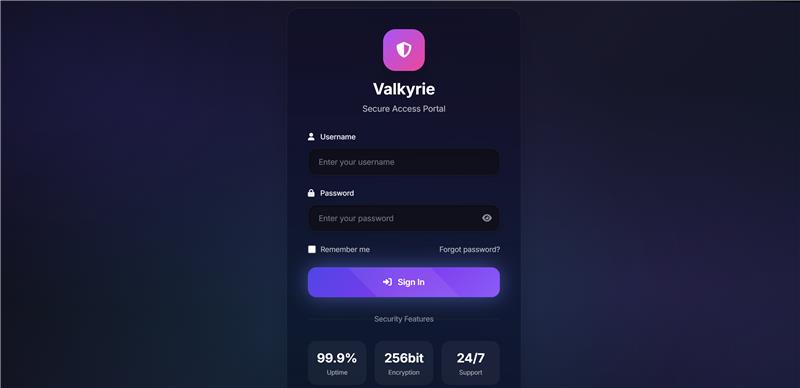
Sample: ANY.RUN
Valkyrie is a stealer and a new MaaS platform linked to Prysmax stealer. It steals credentials and sends data to C2.
How to detect: By the filename Valkyrie.zip in the temp directory, which contains information dumped by a stealer, including running processes and a screenshot, or by using a YARA rule.
Key facts:
- MaaS platform with explicit links in public demonstrations to Prysmax.
- Temporary storage in the Temp directory before sending data to the C2 server.
Analytical note:
| Detected | External sources | ANY.RUN First Submission | Sandbox Evasion | VT First Submission |
|---|---|---|---|---|
| 2025-10-27 | News | 2025-10-08 | 30 | 2025-10-28 |
With the following TI Lookup query, we can search through recent public sandbox analyses and identify this malicious activity.
TI Lookup:
filePath:"C:\\Users\\admin\\AppData\\Local\\Temp\\Valkyrie.zip"
YARA rule for searching in TI Lookup:
rule Valkyrie_Stealer {
    meta:
        description = "Detects Valkyrie information stealer malware"
        author = "ANY.RUN"
        threat = "valkyrie"
        tags = "valkyrie, stealer"


    strings:
        $x1 = "Valkyrie.zip" fullword wide
        $x2 = /Valkyrie \$ \d{4}/ fullword ascii
        $x3 = "C:\\ValkyrieBuilds\\" wide
        $x4 = "Valkyrie folder is empty" fullword wide


        $s1 = "[STEAM] Fetching URL:" fullword ascii
        $s2 = "[ZIP] Creating ZIP from:" fullword wide
        $s3 = "[ZIP] Output path:" fullword wide
        $s4 = "[-] Folder doesn't exist:" fullword wide
        $s5 = "[-] ZIP file is too small (probably empty)" fullword wide
        $s6 = "[+] Total contrase" fullword wide
        $s7 = "[OK] Screenshot guardado en: %s" fullword wide
        $s8 = "[STATS] Counted before conversion:" fullword ascii
        $s9 = "[!] Timeout alcanzado, finalizando extracci" fullword ascii
        $s10 = "[-] No se pudo obtener master key para %s" fullword ascii
        $s11 = "[!] %s - Tipo de cifrado desconocido" fullword wide
        $s12 = /\[-\] Failed to create ZIP after \d+ attempts/ fullword wide
        $s13 = "[-] No data to send!" fullword wide
        $s14 = "[SEND] Raw domain from Steam:" fullword ascii
        $s15 = /\[\*\] === DISCORD TOKEN EXTRACTION V\d+\.\d+ ===/ fullword ascii


        $d1 = /ABE Data Extractor v\d+\.\d+/ fullword wide
        $d2 = "Searching Registry for:" fullword ascii
        $d3 = "No supported browsers found installed on this system" fullword ascii
        $d4 = "Enumerating installed browsers..." fullword ascii
        $d5 = "Terminating browser PID=" fullword ascii
        $d6 = "Starting multi-browser extraction..." fullword ascii
        $d7 = "No supported browsers found on this system" fullword ascii
        $d8 = "Archivo copiado: %s -> %s" fullword ascii
        $d9 = "Ignorando carpeta u objeto no archivo: %s" fullword ascii
        $d10 = "Directorio tdata encontrado: %s" fullword ascii
        $d11 = "el directorio tdata." fullword ascii
        $d12 = "Wallet %s (%s) no encontrada en %s" fullword ascii
        $d13 = "Wallets encontradas:" fullword ascii


    condition:
        uint16(0) == 0x5A4D and
        (
            (any of ($x*) and 8 of ($d*)) or
            (any of ($x*) and 10 of ($s*)) or
            (12 of ($s*) and 11 of ($d*)) or
            (all of ($s*)) or
            (all of ($d*)) or
            (all of ($x*))
        )
}
IOCs:
SHA256:
6BA16CEBAF9782C38306051B0A2DE12056F87F12E444A581EBAFEA3783A444B7Domains:
thenewflights.xyzFile path:
C:\Users\admin\AppData\Local\Temp\Valkyrie.zip
MITRE:
| Technique ID | Technique Name | Evidence |
|---|---|---|
| T1204.002 | User Execution: Malicious File | Saving C:\Users\admin\AppData\Local\Temp\Valkyrie.zip and subsequent unpacking/execution |
| T1059.001 | Command and Scripting Interpreter: PowerShell | PowerShell scripts observed for downloading/decoding .NET binaries |
| T1055 | Process Injection | Attempts to inject into processes and execute code covertly in the ANY.RUN sandbox |
| T1547.001 | Boot or Logon Autostart Execution: Startup Folder | Auto-start via .bat/.lnk in the Startup folder for similar samples |
| T1567 | Exfiltration Over Web Service | Sending collected data to the C2 server thenewflights[.]xyz |
2) Sfuzuan (Windows)
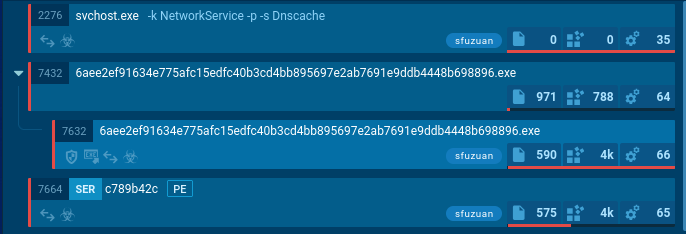
Sample: ANY.RUN
Sfuzuan is a backdoor that can be distributed via multiple completely different sources. It compromises a device by bypassing its security systems to gain unauthorized access. This threat can perform a number of actions of a malicious actor's choice on your device.
How to detect: Detection is possible via the associated TXT file dropped by the malware.
Key facts:
- Can be distributed via multiple completely different sources from internet cafes to emails.
Analytical note:
| Detected | External sources | ANY.RUN First Submission | Sandbox Evasion | VT First Submission |
|---|---|---|---|---|
| 2025-10-30 | 2025-10-22 | 5 | 2025-10-30 |
With the following TI Lookup query, we can search through recent public sandbox analyses and identify this malicious activity.
TI Lookup:
filePath:"C:\\Windows\\864ac8"
IOCs:
SHA256:
0c7b2267cbe19e61327721c52b3e8a349d7003470dad3dff07c87678d80e1564Domains:
31bd9b27a24e0be9.tyui54345.xyz,31bd9b27a24e0be9.zxcv56745.xyz,down.nugong.asia,down.xy58.top,yzzcommon.tyui54345.xyz,yzzcommon.zxcv56745.xyz,69f335c8397887d4.zxcv56745.xyz,69f335c8397887d4.tyui54345.xyz,afdxtest.z01.azurefd.net,02f6a0a9782b848d137c30c0502f89b6.azr.footprintdns.com,5d77815913ef34de.tyui54345.xyz,5d77815913ef34de.zxcv56745.xyz,xcd.yycsl.top
MITRE:
| Technique ID | Technique Name | Evidence |
|---|---|---|
| T1569 | System Services | Executes as Windows Service |
| T1497.003 | Virtualization/Sandbox Evasion: Time Based Checks | Reads the date of Windows installation |
| T1012 | Query Registry | Reads security settings of Internet Explorer |
| T1082 | System Information Discovery | Reads the computer name, Checks supported languages |
| T1614 | System Location Discovery | Checks system location settings |
| T1071 | Application Layer Protocol | Connects to the CnC server |
3) Sorvepotel (Windows)
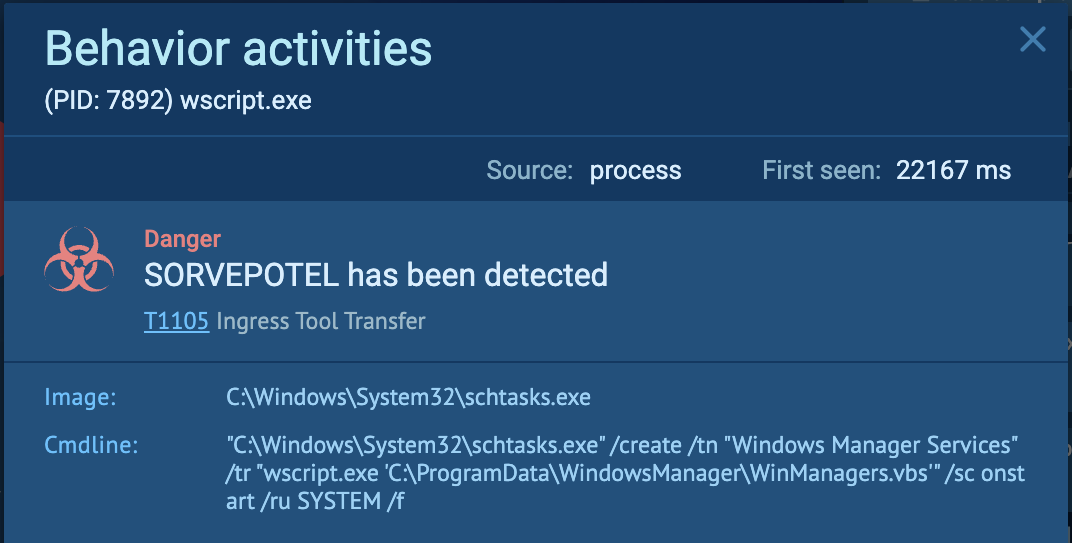
Sample: ANY.RUN
Sorvepotel is a self-propagating malicious campaign targeting Windows systems and distributed via WhatsApp messages with malicious ZIP archives. After opening, the archive unpacks a shortcut (.LNK) that launches hidden PowerShell commands and batch scripts to download malicious components, persists in the system, and connects to the attacker's servers. If the victim has WhatsApp Web open, the malicious code uses the active session to automatically send the same archive to all contacts and groups, ensuring rapid threat propagation.
How to detect: Detection is possible via the command that creates a Windows scheduler task (which launches VBScript as SYSTEM at system startup) and the auto-start registry entry for WinManagers.vbs, which ensures that it runs at each user login.
Key facts:
- Target: Portugal/Brazil. It executes only if the user's IP address is in Portugal and the Windows system language is Portuguese.
Analytical note:
| Detected | External sources | ANY.RUN First Submission | Sandbox Evasion | VT First Submission |
|---|---|---|---|---|
| 2025-10-29 | News | 2025-10-08 | 22 | 2025-10-07 |
With the following TI Lookup query, we can search through recent public sandbox analyses and identify this malicious activity.
TI Lookup:
filePath:"Orcamento-2025*"
IOCs:
SHA256 (-308d1ac9-0a6.vbs):
2c0dff7f8f724476dffd07b0f51ceaae9600073e927d3694d167664eec194b4dSHA256 (-e4b1d448-8e8.vbs):
341252a437e7535f9ea8707e41f0ff2a775eddb16190eeb9f0c0f524214e4f3dSHA256 (-d58fc83f-80f.vbs):
fe10ce5fede53d88f8d06fbf533e1d9416b1c423c556915313fe52e9fa70dcecSHA256 (e7f_7d3a76-f4cf26cc-e7f.vbs):
b05f07e5709dc25ec544ff64dabf54682f15cc2d34d2367102a096232fb3822aSHA256 (Orcamento para avalicaco .vbs):
536864994d1916fe45824abf0276796284c3d36c0dd98c62d5a55892623a5de0SHA256 (tadeu.ps1):
1fc9dc27a7a6da52b64592e3ef6f8135ef986fc829d647ee9c12f7cea8e84645SHA256 (Orcamento.vbs):
3ff9c9cc7cc65bef73bf75d222b8ba56728aeb4fc5e8882e82a4fab970dbe1c6
MITRE:
| Technique ID | Technique Name | Evidence |
|---|---|---|
| T1566.001 | Phishing: Spearphishing Attachment | ZIP archive with VBS spread via WhatsApp Web . |
| T1059.001 | Command and Scripting Interpreter: PowerShell | Malicious PowerShell script executed in memory without writing to the hard drive . |
| T1547.001 | Boot or Logon Autostart Execution: Registry Run Keys | Creation of registry keys to run WinManagers.vbs . |
| T1053.005 | Scheduled Task/Job: Scheduled Task | Setting up scheduled tasks for auto-start . |
| T1027 | Obfuscated Files or Information | Obfuscated VBS and PowerShell scripts with complex masking . |
| T1497.001 | Virtualization/Sandbox Evasion: System Checks | Checks for analysis tools and self-destructs if detected . |
| T1555.003 | Credentials from Web Browsers | Copying Chrome profile for WhatsApp session . |
| T1071.001 | Application Layer Protocol: Web Protocols | HTTP(S) POST/GET requests to the C2 server for management . |
| T1104 | Multi-Stage Channels | Using IMAP/email as a backup CnC channel . |
| T1082 | System Information Discovery | Commands to collect system and victim information (INFO) . |
Conclusion
1) Attacks are shifting to private trusted channels
Sorvepotel uses WhatsApp for propagation, similar to past threats. Attackers are moving away from email and web platforms to environments with weaker filters and higher trust, increasing infection rates and making blocking more difficult.
2) Geofencing as standard anti-analysis
Triggers like IP=Portugal + language=pt-PT in Sorvepotel are now common. If sandboxes cannot simulate regional settings, some malware samples will never reveal their payloads, leading to missed detections.
3) Persistent threats remain dangerous
Sfuzuan and Valkyrie show ongoing activity with new distributions and links to existing platforms like Prysmax, providing a strong return on investment for attackers.
4) Diverse distribution vectors
Sfuzuan highlights use of multiple sources like internet cafes and emails, while Sorvepotel leverages self-propagation via messaging apps, complicating defense strategies.
5) Evasion and persistence techniques
Valkyrie and Sorvepotel employ process injection, obfuscation, and autostart mechanisms to evade detection and maintain presence, emphasizing the need for advanced telemetry monitoring.