TL;DR
- Monkey (Linux ransomware): x64 ELF ransomware written in Go, disables Linux protections, establishes persistence via cron, rc.local, and systemd, collects system information, changes wallpaper, and drops a ransom note. Detection via /etc/systemd/system/monkey.service and .monkeyRansomware file extension.
- Phoenix (Windows backdoor): Second-stage payload distributed via emails in APT espionage campaigns, creates mutex, copies itself for persistence, gathers system info, and communicates with C2 using WinHTTP. Detection via a dropped binary for injection.
- NonEuclid (Windows RAT): C# RAT with persistence, defense bypass (AMSI/Defender), anti-VM, UAC bypass, and optional AES file encryption (.NonEuclid extension), sold as a crimeware kit. Detection via a YARA rule with obfuscated strings and NTSTATUS codes.
1) Monkey (Linux)
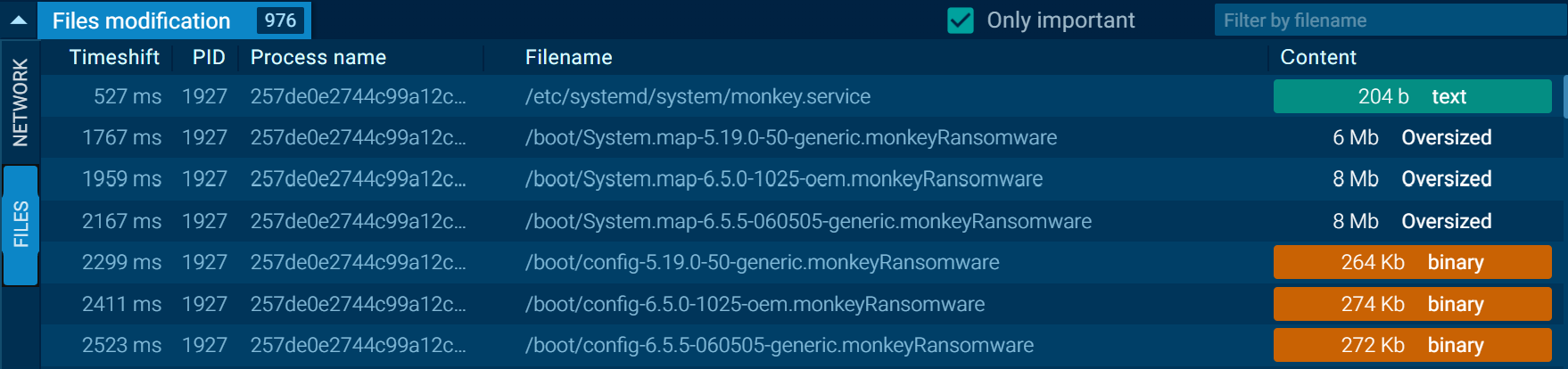
Sample: ANY.RUN
Monkey is an x64 ELF ransomware written in Go; it disables Linux protections, establishes persistence (cron/rc.local/systemd), collects and sends system information, changes the wallpaper and places a README with a ransom demand.
How to detect: Malware creates /etc/systemd/system/monkey.service and changes extension to .monkeyRansomware.
Key facts:
- ELF in Go with leftover Windows artifacts in its code (vssadmin etc.) — looks like a poorly made/AI-generated project.
Analytical note:
| Detected | External sources | ANY.RUN First Submission | Sandbox Evasion | VT First Submission |
|---|---|---|---|---|
| 2025-10-21 | Blog | 2025-10-31 | 3 | 2025-09-12 |
With the following TI Lookup query, we can search through recent public sandbox analyses and identify this malicious activity.
TI Lookup:
filePath:"/etc/systemd/system/monkey.service"
IOCs:
SHA256:
257DE0E2744C99A12CBC1C1B37C76E0E8A010DDE3125EC09468A16E4F8E0F121File path:
/etc/systemd/system/monkey.serviceFile extension:
.monkeyRansomware
MITRE:
| Technique ID | Technique Name | Evidence |
|---|---|---|
| T1547 | Boot or Logon Autostart Execution | crontab @reboot; /etc/rc.local modification; /etc/systemd/system/monkey.service. |
| T1548 | Abuse Elevation Control Mechanism | Restart via sudo for privilege escalation. |
| T1562.001 | Impair Defenses: Disable or Modify Tools | pkill -9 selinux, pkill -9 apparmor, systemctl stop firewalld, systemctl stop ufw. |
| T1082 | System Information Discovery | Collection of hostname, MAC, public IP, country; formation of machineId (SHA-256). |
| T1486 | Data Encrypted for Impact | Encrypted files and creating ransom note. |
2) Phoenix (Windows)
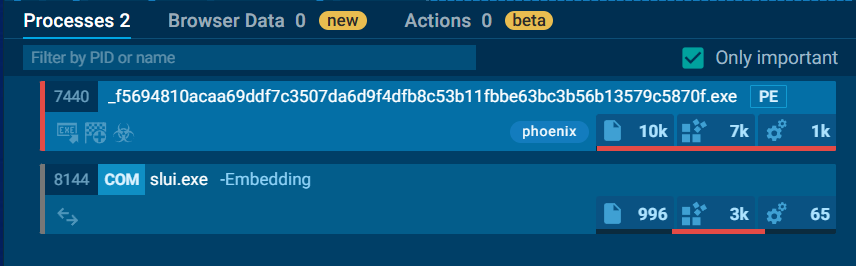
Sample: ANY.RUN
Phoenix is a backdoor distributed via emails, it's the second stage payload dropped by another malware. This backdoor creates a mutex, copies itself to another folder and modifies registry for persistence, gathers system information (Windows version, username, computer name, domain/workgroup). It uses WinHTTP to communicate with a C2 server.
How to detect: Uses the associated binary file that the malware drops for injection purposes.
Key facts:
- It was used by an APT for an espionage campaign. It also utilizes process injection.
Analytical note:
| Detected | External sources | ANY.RUN First Submission | Sandbox Evasion | VT First Submission |
|---|---|---|---|---|
| 2025-10-30 | - | 2025-10-22 | 9 | 2025-10-28 |
With the following TI Lookup query, we can search through recent public sandbox analyses and identify this malicious activity.
TI Lookup:
registryValue:"sysProcUpdate.exe"
IOCs:
SHA256:
f5694810acaa69ddf7c3507da6d9f4dfb8c53b11fbbe63bc3b56b13579c5870fFile path:
c:\programdata\sysprocupdate.exe
MITRE:
| Technique ID | Technique Name | Evidence |
|---|---|---|
| T1547.004 | Boot or Logon Autostart Execution: Winlogon Helper DLL | Modifies Shell registry value for persistence |
| T1012 | Query Registry | Gathers information about system |
| T1082 | System Information Discovery | Gathers information about system |
| T1566.001 | Spearphishing Attachment | Delivers first stage payload via email attachment |
| T1055 | Process Injection | Injects backdoor payload into process |
| T1071.001 | Application Layer Protocol: Web Protocols | Uses WinHTTP to communicate with C2 server |
3) NonEuclid (Windows)
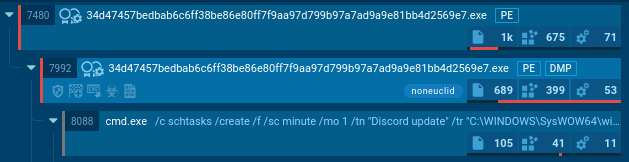
Sample: ANY.RUN
NonEuclid is a Remote Access Trojan (RAT) in C# (.NET Framework 4.8), combining remote management capabilities, persistence, bypassing protections (AMSI/Defender exclusions, anti-VM, anti-process), privilege escalation (UAC bypass) and optionally — file encryption (AES, extension .NonEuclid), i.e. combination of RAT + ransomware functions.
How to detect: Written YARA rule that performs static detection of PE-file by the presence of a set of characteristic Unicode-strings (unique markers/obfuscated identifiers) and by a set of text names of NTSTATUS/system states; triggering occurs if either the entire set of markers is found, or a combination of several markers and a large number of system strings — this indicates a .NET/PE-assembly using Native API and anti-analysis/persistence tricks.
Key facts:
- Combines RAT-possibilities with built-in AES-file encryption (extension .NonEuclid), allowing to switch between "spy" mode and direct encrypting impact. It patches AmsiScanBuffer and adds exclusions to Defender to bypass scanning, and also performs anti-VM checks and terminates work on signs of virtualization. Sold as crimeware-kit with tutorials in underground communities, which accelerates distribution and modifications.
Analytical note:
| Detected | External sources | ANY.RUN First Submission | Sandbox Evasion | VT First Submission |
|---|---|---|---|---|
| 2025-11-06 | News | 2025-09-30 | 3 | 2025-09-14 |
YARA rule for searching in TI Lookup:
rule Noneuclid_RAT
{
    meta:
        description = "Detects Noneuclid RAT. A Remote Access Trojan that uses obfuscated strings and specific Windows NTSTATUS error codes for anti-analysis and persistence"
        author = "ANY.RUN"
        threat = "noneuclid"
        tags = "noneuclid, rat"

    strings:
        $x1 = "bibleoteka" ascii wide
        $x2 = "sendbibleoteka" ascii wide
        $x3 = "not admins privilegs" ascii wide
        $x4 = "cogoldokigoldes" ascii wide
        $x5 = "mymuapplesic" ascii wide
        $x6 = "userprogurrufile" ascii wide
        $x7 = "Sy72slst72slem" ascii wide
        $x8 = "C78lsM78lsD78lS" ascii wide
        $x9 = "CUIUSSapibuttontal" ascii wide

        $s1 = "MutantNotOwned" ascii wide
        $s2 = "SynchronizationRequired" ascii wide
        $s3 = "VirusInfected" ascii wide
        $s4 = "PipeDisconnected" ascii wide
        $s5 = "LpcReceiveBufferExpected" ascii wide
        $s6 = "TooManyGuidsRequested" ascii wide
        $s7 = "TransactionalOpenNotAllowed" ascii wide
        $s8 = "CurrentTransactionNotValid" ascii wide
        $s9 = "VolumeMounted" ascii wide
        $s10 = "HandleNoLongerValid" ascii wide
        $s11 = "RecoveryNotNeeded" ascii wide

    condition:
        uint16(0) == 0x5A4D and
        (
            (all of ($x*)) or
            (4 of ($x*) and 9 of ($s*))
        )
}
IOCs:
Mutex:
piwdiojikylehvklMutex:
mqcpqlvdddbsSHA256 (avse67.exe):
34d47457bedbab6c6ff38be86e80ff7f9aa97d799b97a7ad9a9e81bb4d2569e7
MITRE:
| Technique ID | Technique Name | Evidence |
|---|---|---|
| T1059 | Command and Scripting Interpreter | Execution of commands/scripts and dynamic loading of modules (.NET/C# runtime). |
| T1547.001 | Boot or Logon Autostart Execution: Registry Run Keys | Modifications of Run registry keys for persistence. |
| T1562.001 | Impair Defenses: Disable or Modify Tools | Patching AMSI (AmsiScanBuffer) and programmatic addition of exclusions in Windows Defender. |
| T1497.001 | Virtualization/Sandbox Evasion: System Checks | Anti-VM/anti-analysis — environment checks and emergency exit on signs of virtualization. |
| T1071.001 | Application Layer Protocol: Web Protocols | Network connections to C2 (HTTP/TCP) for control and exfiltration. |
| T1486 | Data Encrypted for Impact | AES file encryption with renaming to .NonEuclid. |
Conclusion
1) AI-generated malware is emerging
Monkey shows signs of being poorly assembled or AI-generated, with leftover Windows artifacts in a Linux ELF, indicating rapid development and potential for more such threats.
2) Hybrid threats combine RAT and ransomware
NonEuclid's integration of remote access with encryption capabilities highlights evolving crimeware kits that offer versatile attack modes, sold in underground markets.
3) Cross-platform risks increase
From Linux ransomware like Monkey to Windows-focused Phoenix and NonEuclid, threats span operating systems, urging comprehensive security across environments.